


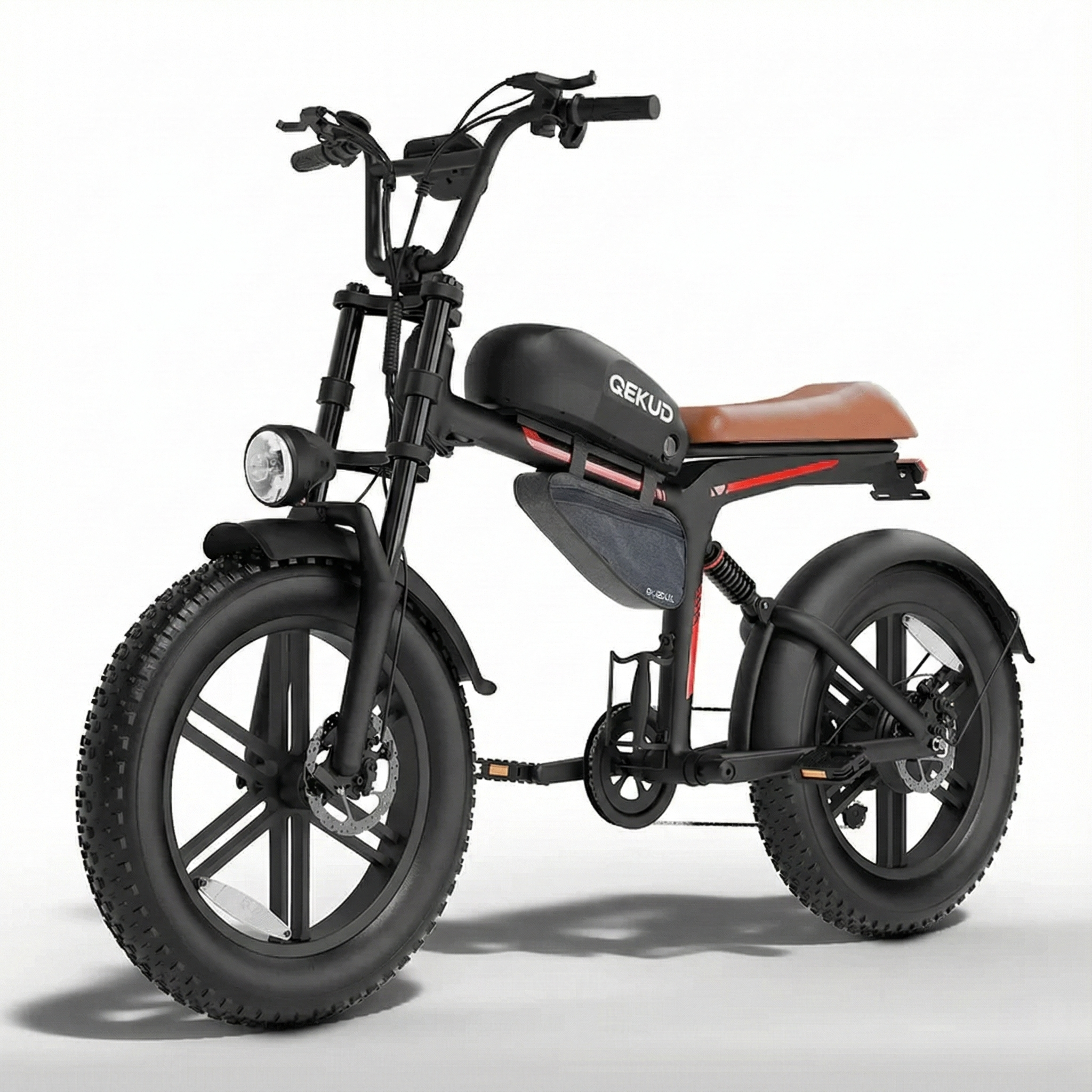
The 80/20 Rule: Why Your E-Bike Battery Performs Better at 80%
For an e-bike, the battery is more than just a power source; it is the heart of your riding experience and a significant investment in sustainable mobility. While many riders instinctively charge their battery to 100% after every trip, modern lithium-ion science suggests a different path.
In the European cycling community, the 80/20 Rule—charging to roughly 80% for daily use and avoiding drops below 20%—has become the gold standard. It is a scientific habit that preserves battery health, ensures stable performance, and significantly extends the lifespan of your e-bike.
Understanding the "Stress Boundaries" of Lithium-Ion
The premium e-bikes found across Europe today, including the full QEKUD range, are powered by high-performance lithium-ion cells. The chemistry of these cells thrives on moderation; they prefer partial charging cycles over being pushed to their absolute limits.
A lithium-ion battery experiences its highest internal stress when it is near full capacity. When a battery is held at 100% and left connected to a charger, the cells endure peak voltage for extended periods. This high-pressure environment accelerates unwanted chemical reactions, leading to the degradation of the electrolyte and electrode materials. The result is irreversible: your total capacity drops over time, and the range that once carried you across city boulevards and countryside trails begins to shrink.
Think of it like a high-quality elastic band. If you constantly stretch it to its absolute limit, it loses its elasticity far sooner than if you used it with moderate tension. Your battery’s "range elasticity" follows the same logic.
The Science of 80/20: Why It Fits the European Lifestyle
The 80/20 rule is not a new concept; it is already the core maintenance principle for electric vehicles (EVs), laptops, and high-end smartphones. European battery engineers recommend it for e-bikes because keeping the charge between 20% and 80% minimizes internal heat and physical stress.
1. Significantly Extended Battery Life
This is the primary value of the rule. Battery longevity is measured in "full charge cycles" (0% to 100%). By operating within the 20-80% window, you are essentially breaking one full cycle into several "shallow" cycles. This allows the battery to endure more total charging events before any noticeable capacity fade occurs, maximizing your return on investment.
2. Consistent Riding Performance
Batteries are at their most stable within the 20-80% range, providing a steady voltage and predictable power output. This means your QEKUD will offer a consistent level of assistance, whether you are climbing a steep incline in the Alps or navigating the cobblestones of a historic city center.
3. Heat Management and Degradation Control
The final 20% of charging (from 80% to 100%) generates significantly more heat than the first 80%. Heat is the "silent killer" of lithium cells. By stopping at 80%, you keep the battery cool—a crucial factor during the warm Mediterranean summers or when charging in heated indoor environments during a Northern European winter.
4. An Added Margin of Safety
An 80% ceiling provides a natural safety buffer. it protects the battery from potential overcharging caused by voltage fluctuations or charger malfunctions, and reduces the likelihood of cell swelling over years of use.
Practical Tips for the European Rider
How do you master the 80/20 rule in your daily routine? Here are a few practical ways to integrate it into your lifestyle:
-
Utilize Timer Plugs: If your charger isn't "smart," use a simple mechanical or digital timer plug—common in most European households. If you know a 30% to 80% charge takes roughly 2.5 hours, set the timer accordingly and let it cut the power automatically.
-
Monitor the Onboard Display: Most modern e-bikes feature a percentage readout on the handlebars. Make it a habit to glance at the screen when you return home or while the bike is plugged in nearby.
-
Learn Your LED Signals: Many QEKUD models use LED indicators on the battery itself. Consult your manual to identify which light pattern corresponds to roughly 80% charge.
-
The "Long-Distance" Exception: The 80/20 rule is for daily use. If you are planning a weekend trek through the countryside or a demanding mountain route, go ahead and charge to 100%. Just try to head out shortly after charging so the battery doesn't sit at 100% for days.
Holistic Battery Care: Beyond the Charge
To truly maximize the life of your QEKUD battery, pair the 80/20 rule with these essential habits:
-
Climate-Conscious Storage: If you aren't riding for several weeks due to a holiday or a particularly harsh winter, remove the battery. Store it in a dry, room-temperature environment at approximately 50-60% charge—the "hibernation" sweet spot for lithium-ion.
-
Optimal Charging Temperatures: Always charge at room temperature (10°C–25°C). Avoid charging in unheated garages during winter or under direct sunlight in the summer, as extreme temperatures damage the cell structure.
-
Stick to Original Equipment: Always use the official QEKUD charger. It is specifically calibrated to your battery’s voltage and chemistry, ensuring the charging curve is gentle and safe—a point frequently emphasized by European consumer protection groups.
Small Habits, Long-Term Vitality
Adopting the 80/20 rule requires a minor shift in mindset—moving from "seeking a full tank" to "seeking the optimal state." This small change reflects the wider European philosophy of sustainability and quality of ownership: taking care of what we own so it serves us longer.
By following these scientific guidelines, your QEKUD e-bike will remain a reliable, powerful companion for years to come. You aren't just charging for your next ride; you are protecting the future of your journeys. Choose the smarter way to charge, and enjoy the freedom of the road with total peace of mind.
Share:
Ride into 2026: Embrace a New Year of Vitality with the Z20 E-Bike
The Cycling Safety Guide: Preventing Injuries and Riding with Confidence on your QEKUD