


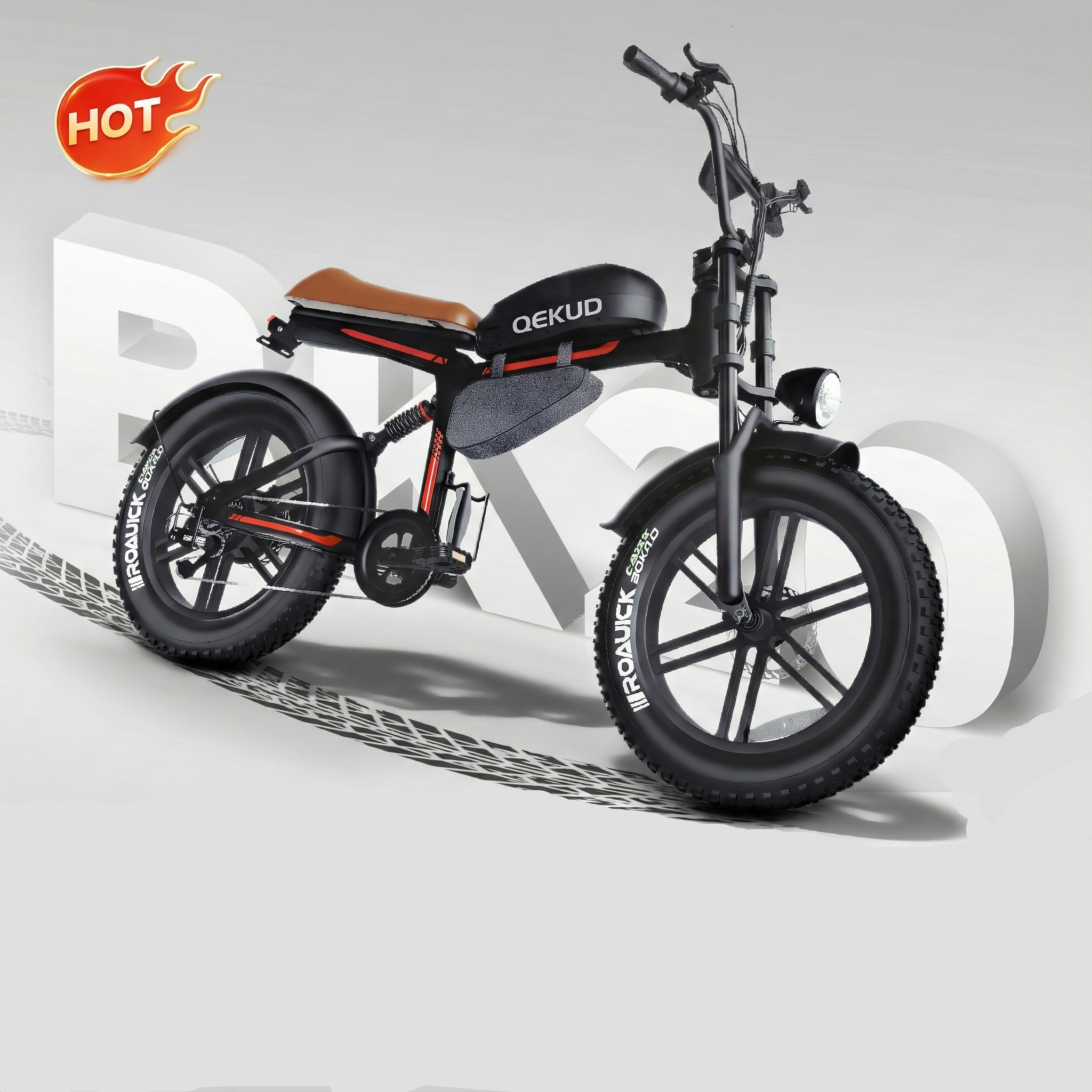
Why This 40-Year-Old EE is Doubling Down on 48V E-Bikes
7:00 AM. I’m in my garage, having a quiet moment with the 48V e-bike that’s been my daily driver for five years. As a senior engineer at a Silicon Valley power management firm, my day job involves designing everything from high-efficiency smartphone chargers to industrial-grade power stages. But of all the hardware I’ve touched, this seemingly "standard" bike is what fascinates me most. It’s a perfect case study in a fundamental engineering truth: The best technology doesn't show off; it just works.
The Reliability of a "Solved Problem"
Three years ago, I briefly toyed with a 52V system. The peak torque was tempting, a real "spec-sheet winner." But when I brought a 48V controller into the lab and tore down the MOSFET gate driver circuit, I was reminded of the Art of Engineering Redundancy.
A 48V system uses a classic 13S (13 cells in series) Li-ion configuration. This is the industry’s "sweet spot," supported by a decade of battle-tested BMS (Battery Management System) architectures. The over-voltage protection thresholds, short-circuit response times, and thermal profiles are all dialed into industrial-grade reliability. In contrast, 52V is an "overclocked" solution. It forces you to rethink capacitor voltage ratings, thicken motor winding insulation, and tighten PCB layout rules to mitigate EMI—small tweaks that can lead to a 3% drop in manufacturing yield. For a mass-market product, I’ll take the 99.9% reliability of 48V over the 52V "beta test" any day.
Robustness vs. Raw Specs: The Winter Test
Last winter, I did a side-by-side cold-weather stress test during a storm. At 25°F (-5°C), the 48V system maintained 92% of its rated power output. The 52V system, however, saw a 15% drop in performance, likely due to how the higher voltage interacted with the increased electrolyte viscosity at low temperatures. It was a stark reminder: In the real world, robustness beats a higher ceiling every time.
Efficiency Gains and the Philosophy of Cost
There’s a common myth that higher voltage always means better efficiency. My internal resistance (IR) data says otherwise. A 48V (13S) pack has one fewer cell in series than a 52V (14S) pack for a given capacity. This translates to an 8% lower total internal resistance.
At a standard 25A discharge, the 48V setup generates 12% less Joule heating than the 52V. During a flat-road cruise, this manifests as a motor that runs 10°C cooler and a roughly 8% bump in actual range. For a daily commute, these numbers are far more valuable than peak torque.
Then there’s the Ecosystem ROI. 48V chargers are the "Type-C" of the e-bike world—ubiquitous, reliable, and 40% cheaper than their 52V counterparts. When I refreshed my battery last year, 18650 cells for 48V packs were 20% cheaper and offered much better cross-compatibility. I even managed to "cannibalize" some 48V modules from a retired drone project to build a backup—a level of plug-and-play ease you just don't get with 52V.
The "Golden Mean" of Human Engineering
In a climb up a 15% grade in the Santa Cruz Mountains, the 48V system does hit its thermal limits about 20 seconds sooner than a 52V. But here’s what my Apple Watch told me: the 48V bike kept my heart rate in the 130-140 bpm aerobic "sweet spot." The 52V bike, with its surplus of power, tricked me into unintentional sprints, pushing me into the 160+ bpm anaerobic zone. For a 40-year-old heart, the 48V is a training partner; the 52V is a temptress.
I also have a deep appreciation for the 48V system’s natural immunity to "over-engineering." While the 52V market often chases expensive Silicon Carbide (SiC) MOSFETs to manage the extra heat, 48V achieves 95% efficiency using mature, cost-effective Silicon. This "good enough" philosophy is the pinnacle of industrial wisdom—achieving peak stability with minimal complexity.
The Verdict: Invisible Tech
In the morning light, my 48V bike doesn't look like a high-performance machine. It doesn't have the heart-pounding specs of a 52V rig, but it embodies what I call "The Engineer’s Romance."
True technology isn't about winning a spec-sheet war in a lab. It’s about ensuring that a person can get to their destination safely, comfortably, and economically every single day. The next time you’re at a bike shop and they try to sell you on the "latest 52V breakthrough," ask yourself: Do you want a lab experiment, or a reliable companion?
As an engineer, I choose the latter. Because the best technology is always "The Invisible Tech."
Share:
Electric bike suddenly malfunctioning? Troubleshoot motor and battery issues like a pro
How to Ride for Range Without Feeling Slow